
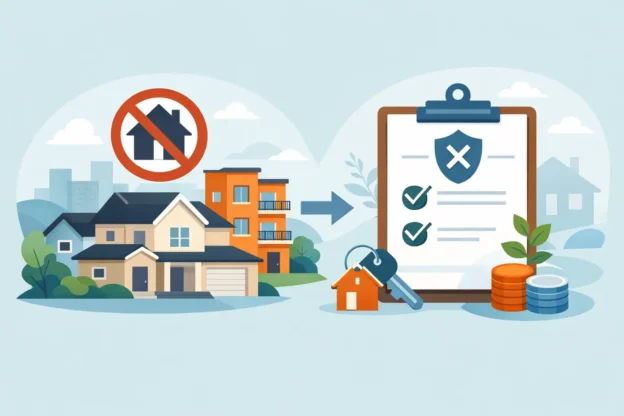
A condo is under contract, the buyer wants FHA financing, and then the project status kills the deal. That is usually the moment people start searching for hoa not fha approved options, hoping there is still a path forward. Sometimes there is. But the right solution depends on whether you are the buyer, the listing agent, the lender, or the HOA itself, and whether the problem is timing, eligibility, or a fixable compliance issue.
This is not a one-size-fits-all situation. An HOA that is not FHA approved does not automatically mean the unit can never be financed. It means the standard FHA path may be blocked unless the project qualifies through another approval route or the transaction shifts to a different financing strategy.
What it means when an HOA is not FHA approved
For condominium transactions, FHA financing usually depends on project eligibility. If the HOA or condo project is not on the approved list, lenders cannot simply ignore that status and close a standard FHA condo loan. The project has to qualify under current FHA condominium rules, or the unit has to qualify under an allowed exception such as single-unit approval, if available.
The reason matters. Some communities are not FHA approved because the approval expired and no one renewed it. Others were never submitted. Some fail due to insurance deficiencies, investor concentration, commercial space limits, litigation, reserve issues, leasing restrictions, or document language that conflicts with FHA guidance. Those are very different problems, and they do not lead to the same options.
That distinction is where many transactions go off track. People hear “not approved” and assume the project is dead for FHA. In reality, some projects can be corrected quickly, some can qualify through a different channel, and some need a complete financing pivot.
HOA not FHA approved options for buyers and agents
If the buyer is committed to the property, the first step is to stop guessing and confirm the actual approval path. A buyer, agent, or lender should determine whether the project is truly ineligible or simply not currently approved. That sounds minor, but it changes everything.
If the project has strong fundamentals, a single-unit approval may be available. This option allows certain individual condo units to qualify for FHA financing even when the entire project is not fully FHA approved. It is not automatic, and it still requires the project to meet core eligibility standards. For example, the community cannot be subject to disqualifying issues that FHA treats as fatal. But when the project is close to compliant, single-unit approval can keep a transaction alive.
If single-unit approval is not available, the buyer may need to consider conventional financing. This is often the fastest alternative, but it comes with trade-offs. The buyer may need a larger down payment, stronger credit, higher reserves, or a better debt-to-income profile. The monthly payment may also change depending on pricing, mortgage insurance, and rate structure.
Another option is to look at non-warrantable condo financing if the project fails standard agency requirements. That can work in harder cases, but it is usually more expensive and more restrictive than FHA or conventional conforming financing. Buyers should expect tighter underwriting and less favorable terms. It can solve a deal, but it is rarely the cheapest solution.
For agents, the operational takeaway is simple. Do not market a condo as FHA-eligible without verified status, and do not assume ineligibility without checking all available approval routes. Accurate project data protects the listing, the contract timeline, and your credibility.
When single-unit approval is the best answer
Single-unit approval is often the most practical answer in the hoa not fha approved options conversation because it targets the actual transaction instead of waiting for a full project approval process. That matters when there is already a contract in place and closing dates are real.
Still, this path works only when the project meets enough of FHA’s baseline standards. The lender must review project-level issues such as owner-occupancy, insurance, delinquency levels, and legal structure. If the HOA documents or operations create disqualifying risk, the unit will not pass just because the buyer qualifies.
This is where precision matters. A weak project review can waste valuable days and still end in denial. A proper review identifies whether the issue is document-based, insurance-based, financial, or structural before the file is pushed through underwriting.
For buyers, that means less guesswork. For lenders, it means better pipeline management. For HOAs, it creates a road map to broader eligibility if the community wants to support future FHA transactions.
When the HOA should pursue project approval
If multiple units in the community are struggling with financing limitations, a one-off solution is usually not enough. The HOA should consider full project approval. This is especially true in communities where first-time buyers, moderate-income buyers, or assumable FHA and VA opportunities are part of the resale market.
A project approval can expand the buyer pool, improve marketability, and reduce failed contracts tied to financing surprises. It also gives agents and lenders a cleaner answer at the start of the transaction instead of a scramble halfway through underwriting.
That said, project approval is not always fast. It requires document review, insurance analysis, questionnaire support, and compliance alignment. If the HOA has unresolved litigation, reserve weaknesses, or governing document conflicts, those issues may need correction before approval is possible.
This is why timing matters. If the community is already seeing repeated financing problems, waiting until a transaction is at risk is usually too late. The strongest HOAs treat approval as an asset, not a last-minute emergency.
Common reasons these deals fail
Most failed condo financing deals do not collapse because FHA rules are impossible. They collapse because the project data is wrong, incomplete, or reviewed too late.
An expired approval might be mistaken for a hard denial. An HOA questionnaire might reveal insurance gaps only after appraisal and underwriting fees are already spent. A lender may start with FHA before confirming whether single-unit approval is viable. Or the listing side may advertise financing options that the project cannot support.
There is also a practical issue that professionals know well: condo files move slower when no one owns the project review. Buyers assume the lender is handling it. Lenders wait for HOA documents. Agents chase status updates. The HOA management company responds on its own timeline. Meanwhile, the contract clock keeps running.
The fix is not more optimism. It is better project-level diligence at the front of the file.
What lenders and mortgage professionals should do next
For lenders, condo transactions in non-approved projects require tighter discipline. Start with an early project screen, not a late-stage surprise. Confirm whether the subject property is a condo under FHA rules, whether the project has current approval status, and whether single-unit approval is even in play.
If the project has fixable issues, document them immediately. If the file needs to pivot to conventional or non-warrantable financing, do it before the borrower loses time and money. The operational value here is clear: fewer dead files, better pull-through, and cleaner borrower communication.
For loan officers, there is also a business development angle. Agents and buyers remember who can solve condo eligibility problems and who only reports them. Specialized project analysis is not just compliance work. It is a revenue protection tool.
What HOAs need to understand
An HOA does not need to love FHA financing to feel the impact of being ineligible. When a project is not financeable through major loan channels, the resale market narrows. That can affect unit values, days on market, and buyer demand.
Some boards resist approval because they assume it brings ongoing burden with little return. Sometimes that is fair, especially in communities with a strong cash or jumbo buyer base. But in many projects, especially entry-level and mid-market condos, financing access directly affects saleability.
If your community has never been reviewed, or if approval expired years ago, the smartest move is not to speculate. Get the project analyzed. Some issues are minor and correctable. Others require policy or document changes. Either way, you need a factual answer before the next contract falls apart.
A non-approved condo project is not always a dead end. But it is always a signal that someone needs to verify the real issue and choose the right path fast. The best outcome comes from treating condo approval as a transaction-critical data point, not a last-minute obstacle.